
//
Case Studies
From meeting overload to leverage // Michael Leibovich's GM @ Behance & Adobe
For senior leaders, the hardest part of the job is often not the work itself. It is the load.
Michael Leibovich leads complex work across product, design, support, and business strategy at Adobe. Like many operators in high-context roles, he was managing a constant stream of meetings, decisions, shifting priorities, and organizational nuance. Over time, the volume of context he had to carry in his head became its own bottleneck. His personal systems for note-taking and organization were no longer enough to keep up.
At the same time, Michael was experimenting with AI tools and seeing both the promise and the limitation. The outputs were often competent, but they lacked the judgment, history, and specificity needed to be truly useful. The problem was not generation. It was context. He did not need another tool that could produce generic text. He needed something that could help him stop starting from zero every time.
“The real promise is not better notes. It is having a trusted partner that can hold context, filter noise, and help you move with more clarity.”

That is where Earmark fit.
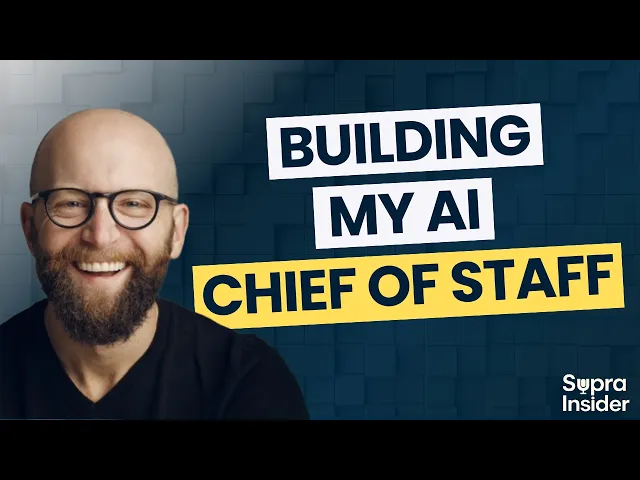
Michael uses Earmark to capture and transcribe meetings in real time without a meeting bot, then feed those transcripts into the system he built as his AI chief of staff. He called out Earmark specifically because it was better tailored to product-oriented work and because it could help generate useful outputs from meetings as they happened, not just summaries after the fact.
Earmark became the input layer for a broader workflow Michael designed to reduce cognitive overhead and improve follow-through. Meeting transcripts flow into his local AI system, where they are processed alongside structured context about his role, priorities, teams, decision-making frameworks, and working style. That system then helps him metabolize the day: summarizing meetings, identifying what is on his plate, drafting first passes on follow-up work, and distinguishing between what he needs to do himself and what can already be started for him.
One of the clearest examples of value came from a simple question: What is the highest leverage thing I should do in the next 30 minutes? Instead of spending that time reconstructing priorities from notes, Slack, and memory, Michael could ask his system for a context-aware recommendation tied to upcoming meetings, blocked work, and open commitments. In his words, that reduced the cognitive load of constantly deciding what mattered most.
The impact went beyond recall. It changed how he showed up.
Michael described using his system to prepare for meetings with one-page briefings built from prior conversations, commitments, and calendar context. That meant he could walk into meetings with a sharper view of what had changed, what was unresolved, and where decisions were needed. He also used the workflow to maintain living context on people and projects over time, so important details discussed in 1:1s and cross-functional meetings did not disappear into scattered notes or memory.
For Michael, Earmark is not just a note taker. It is the system that captures the most valuable layer of work: the live conversation where priorities shift, decisions get made, and execution begins. By turning meetings into usable context in real time, Earmark helps power an AI chief of staff that can reduce noise, preserve continuity, and make follow-through easier.
In high-context leadership roles, that is the difference between keeping up and actually getting leverage.